
Cart
0
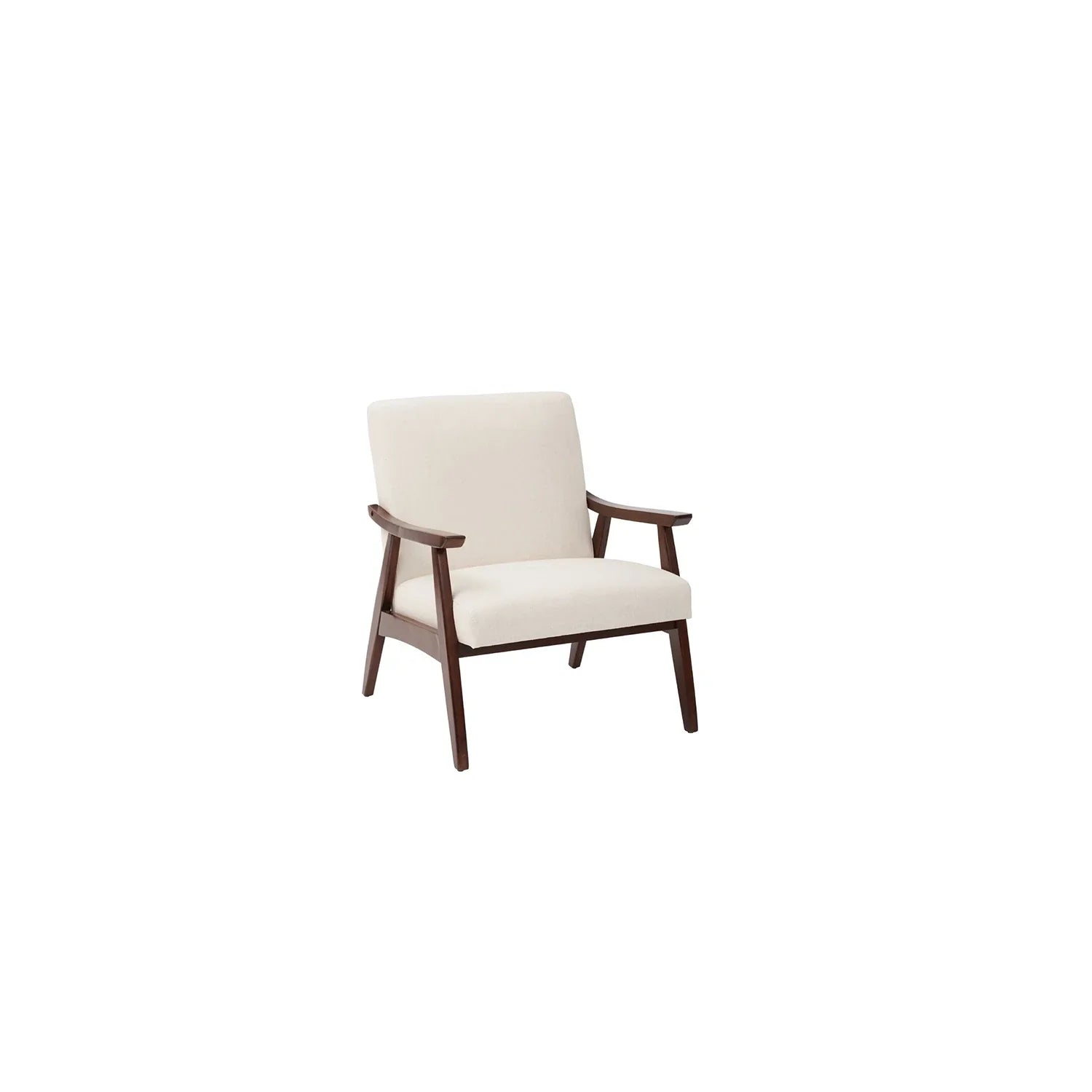
Best Chair for Reading - Structure, Dimensions, and Features (2026)
A chair suitable for reading sessions of 60-120 minutes requires four structural specifications: a back angle of 100-110 degrees that supports the spine without active muscle engagement, a seat depth of 51-61 cm that supports the full thigh length, a back height of 86-107 cm that reaches the upper back and reduces neck strain during sustained downward gaze at a book or screen, and seat foam at 35-40 kg/m3 that maintains consistent geometry throughout the session. A chair missing any one of these four specifications produces neck tension, lower back fatigue, or thigh pressure within 45-60 minutes of continuous reading.
Why Most Chairs Fail for Reading After 45 Minutes
Reading places a specific set of demands on a chair that general-purpose seating is not designed to meet. Three physical mechanisms cause reading discomfort in poorly specified chairs.
The first mechanism is neck and upper back strain from gaze angle. Reading requires a sustained downward gaze of approximately 15-30 degrees below horizontal. In a chair with a 90-degree upright back, maintaining this gaze angle requires the cervical spine to flex forward, placing the head in a forward head posture (anterior head translation). Every 2.5 cm of anterior head translation increases the effective weight of the head on the cervical spine by approximately 4.5 kg. A head that weighs 5 kg at neutral position effectively weighs 18-22 kg at the forward gaze angle typical of reading in an upright chair. The upper trapezius and cervical extensor muscles hold this load and fatigue within 30-45 minutes.
A back angle of 100-110 degrees changes this equation. In a semi-reclined position, the book or reading device rises relative to the eye level, reducing the required downward gaze from 25-30 degrees to 10-15 degrees. This smaller gaze angle reduces anterior head translation and the corresponding cervical muscle load by 40-60%.
The second mechanism is lower back fatigue from unsupported lumbar posture. Reading in an upright 90-degree chair requires continuous active engagement of the erector spinae muscles to maintain posture. After 45-60 minutes, these muscles fatigue and the user begins to slouch, flexing the lumbar spine into a kyphotic position (outward curve). Sustained lumbar kyphosis increases intervertebral disc pressure at the L4-L5 and L5-S1 levels by 40-50% compared to a supported upright posture, producing lower back pain that builds throughout the reading session.
The third mechanism is thigh pressure from inadequate seat depth. Reading typically involves a relaxed, settled seated posture where the user sits fully back in the chair. If seat depth is shorter than the user's thigh length minus 5-8 cm, the user cannot sit fully back and maintain knee clearance simultaneously. The result is either a forward-shifted posture without lumbar contact or a seated position where the front seat edge presses against the back of the thigh, restricting blood flow to the lower leg within 20-30 minutes.
The Four Structural Specifications for a Reading Chair
Specification 1 - Back Angle: 100-110 Degrees
Back angle is the most important specification for reading comfort. The 100-110 degree range positions the spine in a supported semi-reclined posture that reduces cervical load, lumbar muscle engagement, and intervertebral disc pressure simultaneously.
At 100 degrees, the recline is minimal and the user maintains an alert, active posture suitable for reading that requires concentration or note-taking. At 110 degrees, the recline is more pronounced and suits passive reading of fiction or casual material where the user is primarily relaxed rather than engaged.
Back angles above 115 degrees move into lounge chair territory where the posture is more appropriate for resting than reading because the increased recline requires the user to hold the book or device up at a steeper angle to maintain a comfortable gaze, which fatigues the arm and shoulder muscles within 20-30 minutes.
Specification 2 - Seat Depth: 51-61 cm (20-24 inches)
For reading, the user typically sits fully back in the chair with the lumbar region in contact with the back support. This seated position requires that the seat depth allow simultaneous lumbar contact and 5-8 cm of clearance at the back of the knee.
For adults between 165-180 cm tall, this produces a required seat depth of 51-58 cm (20-23 inches). Users under 165 cm need 48-53 cm (19-21 inches). Users over 180 cm need 56-63 cm (22-25 inches).
A seat 5 cm shallower than the user's ideal depth is tolerable for 20-minute sessions but produces noticeable lower back fatigue within 45 minutes because the user cannot simultaneously support the lumbar region and clear the seat edge at the knee without actively adjusting position.
Specification 3 - Back Height: 86-107 cm (34-42 inches) from Floor
Back height determines whether the chair provides upper back and neck support during reading. Standard accent chairs with back heights of 76-86 cm (30-34 inches) support the lumbar and mid-back regions but leave the upper thoracic and cervical spine unsupported. During reading sessions beyond 45 minutes, the unsupported upper back and neck carry increasing cervical extensor muscle load as the user's posture progressively settles.
A back height of 86-96 cm (34-38 inches) reaches the upper thoracic region (T1-T4) for adults between 160-175 cm tall, providing support through the mid-cervical level when the user leans fully back. A back height of 96-107 cm (38-42 inches) reaches the occipital region at the base of the skull for the same user height range, providing full cervical support and allowing the user to rest the head against the chair back during extended reading sessions.
For reading sessions above 90 minutes, a back height of 96-107 cm (38-42 inches) reduces upper back and neck fatigue significantly compared to a standard 76-86 cm back height chair. The user can rest the head and upper back fully against the chair between paragraphs or chapters without leaving the seated position.
Specification 4 - Seat Foam Density: 35-40 kg/m3
Reading sessions of 60-120 minutes place sustained load on the seat foam for longer periods than most accent chair use cases. Foam at 25-30 kg/m3 compresses 3-5 cm during the first 20-30 minutes of a session and then stabilizes at the compressed dimension. This compression reduces effective seat height by 3-5 cm and changes seat depth geometry by shifting the user's hip position backward.
For a reading chair, this geometry change mid-session is particularly problematic because the user is settled into a specific posture and does not notice the gradual change until discomfort has already accumulated. Foam at 35-40 kg/m3 compresses under 1-2 cm under standard adult body weight and maintains consistent seat geometry throughout a 2-hour reading session.
Secondary Features That Improve Reading Comfort
Armrest Height and Depth
Armrests at 56-66 cm (22-26 inches) from the floor allow the reader to rest the book or reading device on or near the armrest surface without holding it entirely with arm muscle support. An armrest depth (front-to-back length) of 20-25 cm (8-10 inches) provides enough surface to rest a book or tablet at a comfortable angle without the item sliding off the short armrest typical of decorative accent chairs.
For users who read on a tablet or e-reader rather than a physical book, the armrest depth and height combination determines whether the device can be rested on the armrest at a readable angle. An armrest at 61 cm (24 inches) height with 23 cm (9 inches) depth allows a tablet to rest at approximately 60-70 degrees from horizontal, which is within the comfortable gaze range for most adults reading in a semi-reclined chair.
Head and Neck Support
Wing panels on a wingback chair provide lateral head support for readers who rest their head to one side. The wings extend 15-25 cm forward from the chair back at shoulder-to-head height, creating a lateral resting surface on both sides. For readers who frequently adopt a lateral head rest position during extended sessions, the wingback structure provides meaningful neck and cervical muscle rest between pages.
A chair back with a slight concave curve from left to right (cupped headrest) provides central head support for users who rest straight back. A headrest that is flat across its width does not cradle the back of the skull and provides less comfortable head rest than a concave surface of the same height.
Footrest or Ottoman
For reading sessions above 90 minutes, a matching ottoman raises the effective comfort duration significantly. An ottoman at 41-46 cm (16-18 inches) height matching the chair seat height allows full leg extension, reducing hip flexor tension and lower limb fatigue. The lower limb fatigue that builds in sessions above 60 minutes is a significant contributor to the overall discomfort that ends a reading session, and an ottoman eliminates this mechanism entirely.
The ottoman depth must be at least 41 cm (16 inches) to support the lower leg from behind the knee to the heel. An ottoman shallower than 38 cm (15 inches) supports only the calf and leaves the ankle and heel unsupported, which creates Achilles tendon pressure within 30 minutes.
Chair Types That Work for Reading
Wingback Chair
A wingback chair with a back angle of 100-105 degrees, seat depth of 51-58 cm, back height of 101-127 cm, and foam at 35-40 kg/m3 is the traditional purpose-designed reading chair. The tall back supports the full spinal length. The wings provide lateral head support and create visual enclosure that reduces peripheral distraction during reading. The upright-to-slightly-reclined back angle supports alert reading posture for sessions of 60-90 minutes.
The limitation is room scale requirement. A wingback chair back height of 101-127 cm requires ceiling height of 270 cm (9 feet) or above for correct visual proportion. In rooms with standard 240 cm (8 foot) ceilings, a wingback chair reads as visually heavy.
High-Back Accent Armchair
A high-back accent armchair with a back height of 91-101 cm (36-40 inches) and back angle of 100-107 degrees is the most versatile reading chair type for standard ceiling heights. The back height supports the upper thoracic and lower cervical spine without reaching the full wingback height that creates proportion issues in 240 cm ceiling rooms. The 100-107 degree back angle provides sufficient recline for 60-90 minute reading sessions without the deep recline that makes active reading difficult.
Lounge Chair
A lounge chair with a back angle of 100-110 degrees and seat depth of 56-64 cm supports comfortable reading for passive, relaxed reading sessions of 90-180 minutes. The deeper recline reduces cervical muscle load to the minimum of all accent chair types. The limitation is that holding a book or device at the correct gaze angle in a fully reclined position requires sustained arm and shoulder effort. A lounge chair is better suited to e-reader or audio book use where the device can rest on the chest or on an adjacent surface than to physical book reading where the user must hold the book up consistently.
Club Chair
A club chair with padded armrests at 61-68 cm (24-27 inches), seat depth of 56-64 cm, and back angle of 100-105 degrees provides excellent support for reading sessions of 60-90 minutes. The high padded armrests carry 15-20% of upper body weight and provide a surface to rest the book or device. The deep seat supports the full thigh length. The semi-reclined back angle reduces lumbar muscle load without the full recline that makes active reading difficult.
How Penghao Furniture Produces Reading Chairs
Penghao Furniture produces wingback chairs, high-back accent armchairs, lounge chairs, and club chairs factory-direct in China, with export to the US and Europe.
Standard reading chair specifications available through Penghao production: back angle 100-110 degrees confirmed at production, seat depth 51-61 cm, back height 86-107 cm, seat foam 35-40 kg/m3, back foam 20-25 kg/m3 with lumbar region contouring at 18-23 cm above seat surface, armrest depth 20-25 cm, armrest height 56-68 cm.
Custom reading chair specifications include extended back heights of 107-122 cm (42-48 inches) for tall users above 185 cm who require full cervical support, concave headrest profiles for central head support, and matched ottoman production confirmed to chair seat height within 3 cm.
MOQ starts at 10-50 units depending on configuration. Lead time is 15-45 days from confirmed specification. Factory-direct pricing is 20-40% below equivalent US retail pricing for the same back angle, back height, and foam specification.
An interior designer sourcing reading chairs for 12 private residential library rooms specified wingback chairs with 103-degree back angle, 101 cm back height, 56 cm seat depth, and 38 kg/m3 foam, ordering 24 units factory-direct from Penghao Furniture at 31% below the equivalent US wholesale price for the same specification.
FAQ
What type of chair is best for reading?
A wingback chair or high-back accent armchair with a back angle of 100-110 degrees, seat depth of 51-61 cm, back height of 86-107 cm, and seat foam at 35-40 kg/m3 is best for reading sessions of 60-120 minutes. The back angle reduces cervical and lumbar muscle load. The seat depth supports the full thigh length. The back height supports the upper thoracic and lower cervical spine. Club chairs with padded armrests at 61-68 cm height are the second best option for reading because the armrests provide a surface to rest the book or reading device.
What back angle is best for reading in a chair?
A back angle of 100-110 degrees is best for reading. At this range, the semi-reclined position reduces the downward gaze angle from 25-30 degrees (typical in an upright 90-degree chair) to 10-15 degrees, which reduces anterior head translation and the corresponding cervical extensor muscle load by 40-60%. Back angles below 95 degrees require continuous active lumbar and cervical muscle engagement that fatigues within 45 minutes. Back angles above 115 degrees require the user to hold the reading material up at a steep angle, fatiguing arm and shoulder muscles within 20-30 minutes.
How important is seat depth for a reading chair?
Seat depth is critical for reading comfort because reading posture typically involves sitting fully back in the chair with the lumbar region in contact with the back support. A seat that is 5 cm shallower than the user's thigh length minus 5-8 cm prevents simultaneous lumbar contact and knee clearance, forcing the user to sit forward and lose back support within 30-45 minutes. For adults between 165-180 cm tall, a seat depth of 51-58 cm (20-23 inches) provides full thigh support with correct knee clearance in the fully settled reading position.
Does chair back height matter for reading?
Back height matters significantly for reading sessions above 45 minutes. A back height of 86-96 cm (34-38 inches) supports the upper thoracic region and reduces upper back fatigue. A back height of 96-107 cm (38-42 inches) supports the lower cervical spine and allows the user to rest the head against the chair back during extended sessions. Standard accent chairs with back heights of 76-86 cm (30-34 inches) leave the upper back and cervical spine unsupported, which contributes to neck tension and upper trapezius fatigue in sessions above 45 minutes.
Should a reading chair have an ottoman?
For reading sessions above 90 minutes, a matching ottoman at 41-46 cm (16-18 inches) height improves overall comfort by allowing full leg extension. Lower limb fatigue from sustained knee flexion at 90 degrees builds significantly after 60 minutes and becomes a primary source of discomfort that ends reading sessions earlier than neck or back fatigue alone. An ottoman eliminates this mechanism and extends comfortable session duration by 30-60 minutes for most users. The ottoman depth must be at least 41 cm (16 inches) to support the lower leg from behind the knee to the heel.
What foam density is best for a reading chair?
Seat foam at 35-40 kg/m3 is the recommended specification for a reading chair. At this density, the seat compresses under 1-2 cm under standard adult body weight and maintains consistent seat height and depth geometry throughout a 2-hour reading session. Foam below 30 kg/m3 compresses 3-5 cm during the session, gradually shifting the user's seated position and disrupting the posture the chair was configured to provide. The gradual nature of this compression is particularly problematic for reading because the user does not notice the change until discomfort has already accumulated over 30-45 minutes.
Summary
A reading chair requires four structural specifications: back angle of 100-110 degrees, seat depth of 51-61 cm matched to the user's thigh length, back height of 86-107 cm for upper back and neck support, and seat foam at 35-40 kg/m3 to maintain consistent geometry throughout the session. Wingback chairs, high-back accent armchairs, and club chairs are the three types that carry these specifications in standard production. For sessions above 90 minutes, a matching ottoman at 41-46 cm height extends comfortable reading duration by 30-60 minutes.
Penghao Furniture produces all three chair types factory-direct with confirmed back angle, seat depth, back height, and foam density specifications. MOQ starts at 10 units. Lead time is 15-45 days.
