
Cart
0
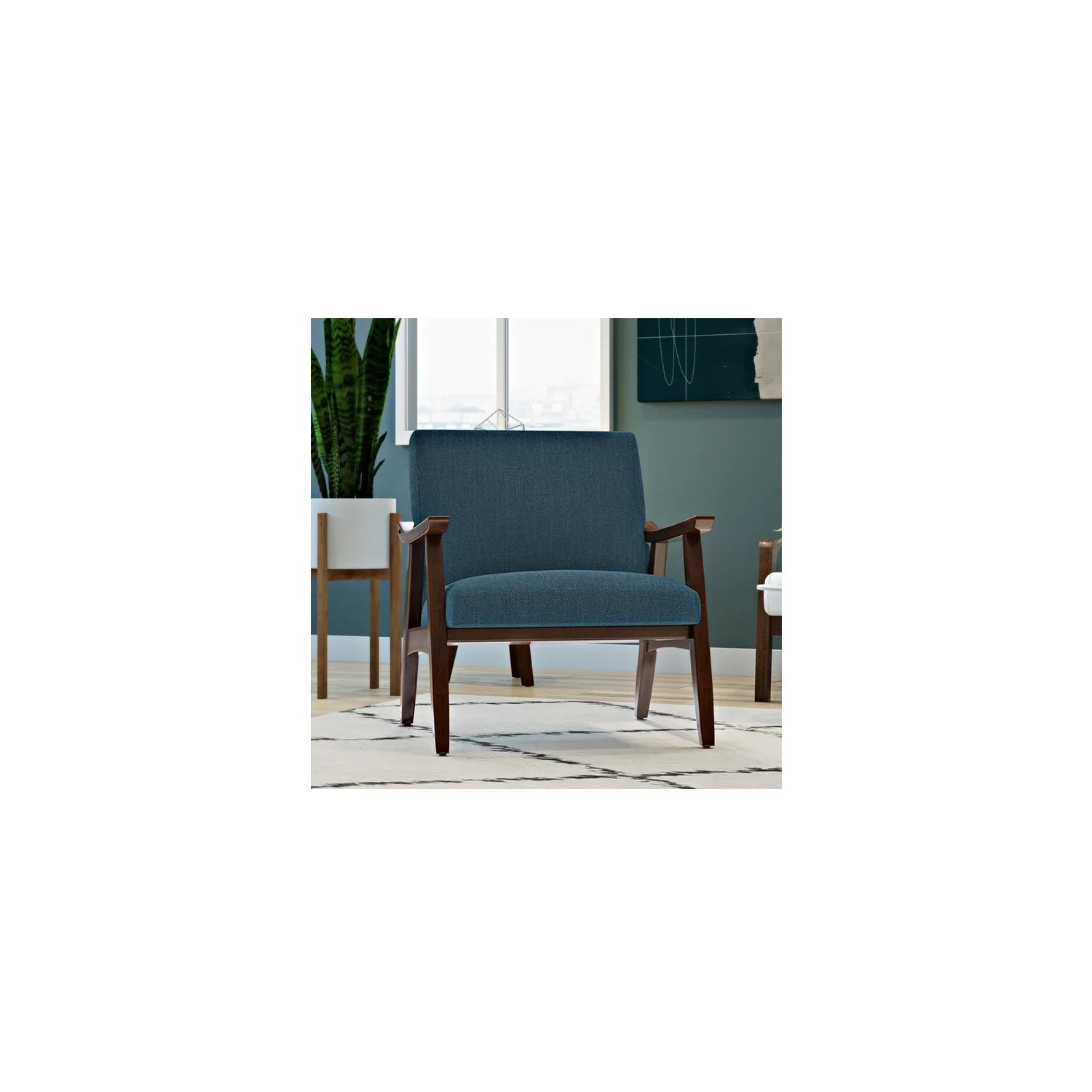
Chair for Elderly Comfort - Seat Height, Support, and Safety Guide (2026)
A chair for elderly comfort requires five structural specifications that differ from standard accent chair recommendations: seat height of 46-51 cm (18-20 inches) to reduce hip and knee effort during standing, seat foam at 35-40 kg/m3 to prevent compression-related posture changes, armrest height at 63-68 cm (25-27 inches) to support the push-up movement during standing, back angle of 100-105 degrees to reduce lumbar muscle load, and a stable four-leg or sled base that does not shift during the standing process. A chair that meets all five specifications reduces fall risk during the sit-to-stand transition and supports comfortable seated use for 60-90 minutes.
Why Standard Accent Chairs Create Problems for Elderly Users
Standard accent chairs are designed for adults between 160-185 cm tall with full lower limb strength and normal hip and knee mobility. Elderly adults over 65 face three physical changes that make standard accent chair specifications inadequate.
The first change is reduced lower limb muscle strength. Adults over 65 experience an average of 1-2% reduction in lower limb muscle mass per year after age 50, a process called sarcopenia. By age 70, many adults have lost 20-30% of the quadriceps strength they had at age 40. Standing from a standard accent chair seat at 43-46 cm (17-18 inches) requires the quadriceps to generate approximately 60-70% of maximum voluntary contraction force for a 70-year-old adult. A seat at 48-51 cm (19-20 inches) reduces the required quadriceps force to 40-50% of maximum, which is within the comfortable range for most adults over 65 without significant muscle weakness.
The second change is reduced hip and knee joint range of motion. Osteoarthritis affects approximately 30% of adults over 65 and restricts comfortable knee flexion to 90-110 degrees rather than the 130-140 degrees available in younger adults. A standard accent chair seat at 43 cm (17 inches) requires the knee to flex to approximately 100-110 degrees during the sit-to-stand transition. For an adult with osteoarthritis limiting comfortable flexion to 95 degrees, this transition is painful and may result in the user pushing off asymmetrically, increasing fall risk. A seat at 48-51 cm reduces the required knee flexion to 85-95 degrees, which falls within the comfortable range for most adults with mild to moderate knee osteoarthritis.
The third change is reduced balance and postural stability. Adults over 65 show measurably reduced ability to recover from unexpected postural perturbations during the sit-to-stand transition. A chair that shifts, slides, or rocks during the push-up phase of standing removes the stable base the user depends on for safe transition. Chair bases that slide on hard floors, chairs with loose joints that flex under push-up force, and chairs with armrests that compress or tilt during loading all increase fall risk during standing.
The Five Specifications for an Elderly-Appropriate Chair
Specification 1 - Seat Height: 46-51 cm (18-20 inches)
Seat height is the most critical specification for elderly users. The standard accent chair range of 43-48 cm (17-19 inches) is appropriate for adults with full lower limb strength, but for adults over 65 the upper end of this range and slightly above is significantly safer and more comfortable.
A seat height of 46-51 cm (18-20 inches) reduces required quadriceps force during standing by 15-25% compared to a 43 cm seat. This reduction is the difference between a comfortable, controlled stand and a labored stand that requires the user to rock forward multiple times before achieving enough momentum to rise.
For adults using a walker or requiring one hand free for an assistive device during standing, a seat height of 48-51 cm (19-20 inches) is preferable because it reduces the asymmetric load on the supporting arm during the push-up phase.
Seat height should be measured at the front edge of the uncompressed cushion. With foam at 35-40 kg/m3, the effective seated height will be 1-2 cm below the stated measurement. For a target effective seated height of 48 cm, specify a stated seat height of 49-50 cm with 35-40 kg/m3 foam.
Specification 2 - Seat Foam Density: 35-40 kg/m3
Foam density is the specification that most commonly causes problems for elderly users in chairs that were initially comfortable. A chair with foam at 25-28 kg/m3 compresses 4-6 cm under body weight, reducing the effective seat height from the stated measurement. A chair stated at 46 cm seat height with 25 kg/m3 foam delivers an effective seated height of 40-42 cm for an adult weighing 70-80 kg. This effective height may be below the safe standing threshold for an adult over 65 even though the stated specification appeared adequate.
Additionally, foam at 35-40 kg/m3 maintains a firm, stable seat surface that does not shift or tilt under the asymmetric loading that occurs during the sit-to-stand transition. Soft, low-density foam compresses unevenly when the user pushes off from one armrest or leans to one side during standing, creating an unstable base. Firm foam at 35-40 kg/m3 resists this uneven compression and maintains a level seat surface throughout the transition.
Specification 3 - Armrest Height: 63-68 cm (25-27 inches) from Floor
Armrests are the primary structural support for elderly users during the sit-to-stand transition. The correct armrest height places the user's elbow at approximately 90-100 degrees of flexion when the user is seated upright with their upper arm hanging naturally from the shoulder. For adults between 155-175 cm tall, this position corresponds to an armrest height of 63-68 cm (25-27 inches) from the floor.
Armrests positioned below 58 cm (23 inches) require the user to bend forward and downward to reach the armrest during standing, which shifts the center of gravity forward and increases the risk of the user falling forward during the transition. Armrests above 71 cm (28 inches) require the user to lift their shoulders above a comfortable position during push-up, reducing the mechanical advantage of the arm press and increasing shoulder joint stress.
Armrest structural integrity is as important as armrest height for elderly users. The armrest must withstand a downward and forward force of 80-120 N (18-27 lbf) during the push-up phase of standing without deflecting, rocking, or separating from the frame. Armrests attached to the frame only at the back upright (single-point attachment) flex under this load. Armrests attached to both the back upright and the side of the seat frame (dual-point attachment) resist the push-up load without deflection.
Specification 4 - Back Angle: 100-105 Degrees
A back angle of 100-105 degrees from the seat plane positions the elderly user's center of gravity slightly behind the hip joint in the fully seated position. This placement requires less active muscle engagement from the erector spinae and iliopsoas muscles to maintain seated posture, which reduces fatigue during extended sitting of 60-90 minutes.
For the sit-to-stand transition specifically, a 100-105 degree back angle positions the user's torso at an angle that facilitates forward lean during the initial phase of standing without requiring the user to push away from the back support. At 90 degrees, the user's back is vertical in the seated position, requiring a larger forward lean to shift the center of gravity over the feet during standing. This larger lean increases the distance and muscular effort required before the user can push to a standing position.
A back angle above 110 degrees creates excessive recline that makes the sit-to-stand transition more difficult for elderly users because the larger reclining angle requires greater forward momentum to bring the center of gravity over the feet. Lounge chairs at 100-115 degrees are not recommended as the primary seating option for adults with significant lower limb weakness because the low seat height (36-43 cm) and deep recline combine to make standing significantly more difficult than from an upright chair with a higher seat.
Specification 5 - Base Stability
The chair base must not shift, slide, or tip during the sit-to-stand transition. Four structural base features determine stability for elderly users.
Chair weight is the first factor. A chair weighing less than 7 kg on a hard floor surface slides under the forward-and-downward push force of the sit-to-stand transition. A chair weighing 9-14 kg resists this force under normal use without requiring floor attachment. For very light chairs on polished hard floors, non-slip rubber feet at all four base contact points prevent sliding under push-up force.
Leg spread is the second factor. A chair with legs spread wider than the seat frame at the floor contact points (angled outward from the seat) provides a more stable base than a chair with vertical legs directly below the seat corners. The wider the effective base, the larger the force required to tip the chair during the sit-to-stand transition.
Joint rigidity is the third factor. A chair with loose joints at the leg-to-seat connection flexes and creaks under the asymmetric loading of the sit-to-stand push. This flex reduces the effective stability of the base and, more importantly, signals structural unreliability to the user, causing them to reduce the push force and making standing more difficult. Corner block reinforcement and dual-point arm attachment are the minimum joint specifications for chairs used by elderly adults.
Armchair vs armless is the fourth factor. Chairs without armrests are not suitable as primary seating for adults over 65 with lower limb weakness or balance concerns. The armrest provides both a functional push-up surface and a postural reference point that helps the user confirm their balance before committing to the full stand. Slipper chairs and other armless chair types are unsuitable for this use regardless of their seat height and foam specification.
Chair Types That Work for Elderly Comfort
A standard accent armchair with seat height adjusted to 48-51 cm, seat foam at 35-40 kg/m3, armrests at 63-68 cm, and back angle at 100-105 degrees is the most practical chair type for elderly residential use. This configuration provides the correct ergonomic specifications without requiring the user to adapt to a medical or assistive device aesthetic that may be unwelcome in a residential living room.
A wingback chair with the same seat height and foam specifications adds a tall back at 101-127 cm that supports the full spinal length during extended sitting, which reduces cervical and upper thoracic fatigue for users who spend 90-120 minutes in the chair. The wings provide lateral head support for users who rest their head to one side during sitting.
A club chair is appropriate for elderly users who are primarily concerned with extended sitting comfort and have adequate lower limb strength for standing from a deep, lower-profile seat. Club chair seat heights of 41-46 cm (16-18 inches) are at the lower boundary of the recommended range for elderly users and should be specified at the upper end (45-46 cm) with 38-40 kg/m3 foam to maintain effective seated height above 44 cm.
Lounge chairs with seat heights of 36-43 cm are not recommended as primary chairs for adults over 65 with reduced quadriceps strength or limited knee flexion. The combination of low seat height and deep recline makes safe independent standing difficult for this population.
How Penghao Furniture Produces Elderly-Appropriate Chairs
Penghao Furniture produces accent chairs and armchairs to elderly-comfort specifications through OEM production, with all five specifications confirmed in writing at the order stage.
Standard elderly-comfort production specification: seat height 48-51 cm (19-20 inches), seat foam 38-40 kg/m3, armrest height 63-68 cm (25-27 inches), back angle 100-105 degrees, dual-point armrest attachment to back upright and seat frame side, corner block reinforcement at all four seat frame corners, non-slip rubber feet as standard on all four legs.
Custom elderly-comfort specifications available include extra-high seat heights of 51-56 cm (20-22 inches) for adults with severe knee or hip mobility restrictions, extended back lengths of 66-76 cm for full upper back and neck support, and wider seat widths of 61-71 cm (24-28 inches) for bariatric-specification chairs rated to 180 kg (400 lbs).
Residential and care environment orders (assisted living facilities, care homes, medical waiting areas) are produced under the same OEM specification process with confirmed joint construction, foam density, and armrest structural loading ratings for all units.
MOQ starts at 10-50 units depending on configuration. Lead time is 15-45 days from confirmed specification. Factory-direct pricing is 20-40% below equivalent US retail or healthcare furniture pricing for the same seat height, foam density, and structural specification.
FAQ
What seat height is best for an elderly person?
A seat height of 46-51 cm (18-20 inches) is recommended for adults over 65. This range reduces the required quadriceps force during standing by 15-25% compared to a standard 43 cm seat height, placing the required effort within the comfortable range for most adults over 65 without significant muscle weakness. For adults with knee osteoarthritis limiting comfortable flexion to 90-95 degrees, a seat height of 48-51 cm reduces required knee flexion during the sit-to-stand transition to 85-95 degrees, within the comfortable range for mild to moderate osteoarthritis.
Why is it hard for elderly people to get out of a chair?
Difficulty standing from a chair for elderly adults is caused by three factors: reduced quadriceps strength from age-related sarcopenia (1-2% muscle mass loss per year after age 50), restricted hip and knee range of motion from osteoarthritis or reduced joint flexibility, and reduced balance and postural stability during the sit-to-stand transition. A chair with a seat height of 46-51 cm, firm foam at 35-40 kg/m3, and stable armrests at 63-68 cm addresses all three factors by reducing the required muscle force, reducing required joint flexion, and providing a stable push-up surface.
What is the best chair type for an elderly person?
A standard accent armchair with seat height of 48-51 cm, seat foam at 35-40 kg/m3, armrests at 63-68 cm, and back angle of 100-105 degrees is the most practical chair type for elderly residential use. This configuration meets all five elderly-comfort specifications while maintaining a residential aesthetic that does not impose a medical or assistive device appearance. Wingback chairs with the same seat specifications add full upper back and head support for users who sit for 90-120 minutes. Lounge chairs with seat heights below 43 cm are not recommended for adults with reduced lower limb strength.
What foam density is safe for an elderly person?
Seat foam at 35-40 kg/m3 is the minimum safe specification for elderly users. At this density, the effective seated height remains within 1-2 cm of the stated seat height, maintaining the 46-51 cm range required for safe sit-to-stand transitions. Foam below 30 kg/m3 compresses 3-5 cm under adult body weight, which can reduce a stated 48 cm seat height to an effective 43-45 cm, lowering the user below the safe standing threshold. Additionally, firm foam at 35-40 kg/m3 maintains a level, stable seat surface during the asymmetric loading of the sit-to-stand push.
What armrest height is best for elderly users?
Armrest height of 63-68 cm (25-27 inches) from the floor is recommended for adults between 155-175 cm tall. This height places the elbow at 90-100 degrees of flexion when the user is seated upright, which is the optimal mechanical position for generating upward push force during standing. Armrests below 58 cm require the user to lean forward to reach them during standing, shifting the center of gravity and increasing fall risk. Armrests above 71 cm require shoulder elevation above a comfortable angle, reducing push-up force and increasing shoulder joint stress.
Can an accent chair be used safely by elderly people?
Yes, provided the chair meets five specifications: seat height of 46-51 cm, seat foam at 35-40 kg/m3, armrests at 63-68 cm with dual-point structural attachment, back angle of 100-105 degrees, and a stable base weighing 9-14 kg with non-slip rubber feet. Standard accent chairs with seats at 43 cm, foam below 30 kg/m3, and single-point armrest attachment do not meet elderly-comfort specifications and pose fall risk during the sit-to-stand transition for adults over 65 with reduced lower limb strength or limited joint mobility.
Summary
A chair for elderly comfort requires five specifications that differ from standard accent chair design: seat height of 46-51 cm to reduce quadriceps force during standing, seat foam at 35-40 kg/m3 to prevent compression-related height reduction, armrests at 63-68 cm with dual-point attachment for safe push-up support, back angle of 100-105 degrees to reduce lumbar muscle load, and a stable base weighing 9-14 kg with non-slip feet. A standard accent armchair meeting all five specifications is the most practical chair for elderly residential use without requiring a medical aesthetic.
Penghao Furniture produces accent chairs to confirmed elderly-comfort specifications through OEM production. MOQ starts at 10 units. Lead time is 15-45 days.