
Cart
0
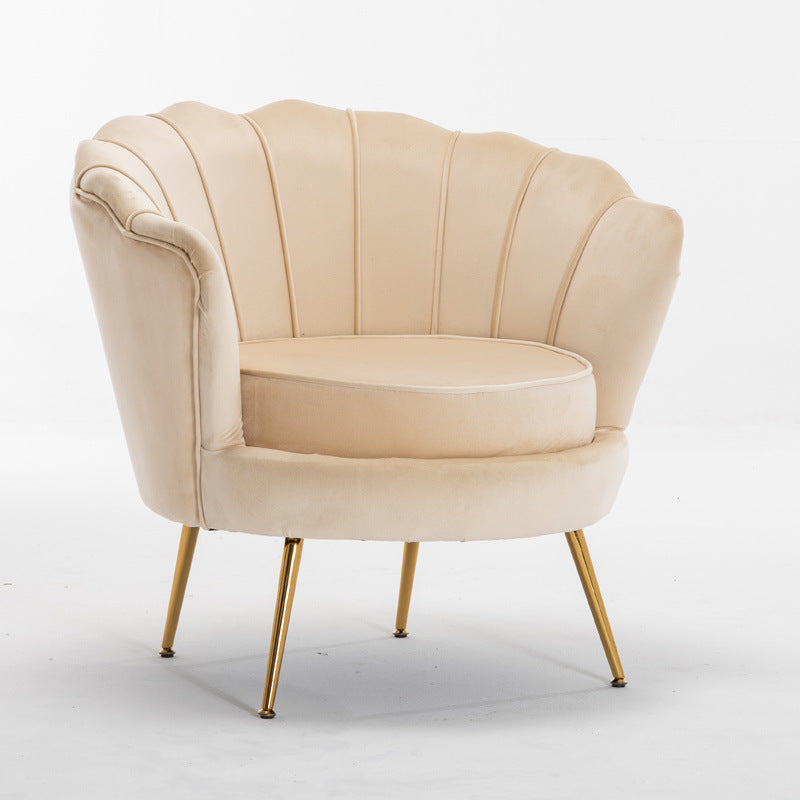
Standard chair seat height is 43-48 cm (17-19 inches) from the floor for dining chairs and upright accent chairs. This range positions adults between 160-185 cm tall with feet flat on the floor and hips level with or slightly above the knees. Counter chairs sit higher at 61-66 cm (24-26 inches). Bar stools sit highest at 71-81 cm (28-32 inches). The correct seat height depends on the chair type, the table it pairs with, and the height of the primary user.
Why Seat Height Is the Most Important Chair Dimension
Seat height controls posture, comfort duration, and the physical ease of sitting down and standing up. A chair with incorrect seat height causes one of two problems within 20-30 minutes of seated use.
When the seat is too low, the hips drop below the knees. This position increases compression on the lumbar discs and makes standing up from the chair require significantly more leg and core muscle effort. For adults over 60 or with limited knee mobility, a seat below 43 cm (17 inches) becomes difficult to exit without arm support.
When the seat is too high, the feet cannot reach the floor and the full weight of the lower legs presses down through the back of the thighs. This cuts off circulation and creates numbness in the legs within 15-20 minutes of seated use. A chair 5 cm too tall for the user produces noticeable discomfort before a single meal is finished.
Appearance, fabric, and frame style can all be adjusted after purchase. Seat height cannot. Confirming seat height before ordering is the single most important step in chair selection.
Standard Seat Height by Chair Type
Every chair type carries a different standard seat height because each type is designed for a different use, table height, or user posture.
| Chair Type | Seat Height (cm) | Seat Height (inches) | Designed For |
|---|---|---|---|
| Dining side chair | 43-48 cm | 17-19 in | Standard dining table 74-76 cm |
| Dining armchair | 43-48 cm | 17-19 in | Standard dining table 74-76 cm |
| Accent armchair | 43-48 cm | 17-19 in | Accent and conversation use |
| Barrel chair | 43-46 cm | 17-18 in | Living room focal seating |
| Wingback chair | 43-48 cm | 17-19 in | Reading and conversation |
| Slipper chair | 38-43 cm | 15-17 in | Bedroom and compact spaces |
| Club chair | 41-46 cm | 16-18 in | Lounge and extended rest |
| Lounge chair | 36-43 cm | 14-17 in | Passive rest and reclining |
| Counter chair | 61-66 cm | 24-26 in | Counter-height table 89-91 cm |
| Bar stool | 71-81 cm | 28-32 in | Bar-height table 101-107 cm |
The seat heights above represent the industry standard ranges that chair manufacturers globally follow. These ranges exist because they match the ergonomic needs of the majority of adult users at the corresponding table heights.
Seat Height and Table Height - The Required Relationship
Chair seat height and table height are not independent decisions. The gap between the top of the seat cushion and the underside of the table surface must fall between 25-30 cm (10-12 inches) for comfortable adult dining and working posture.
This gap allows the thighs to fit under the table without pressing against the underside of the tabletop or the table apron (the structural frame running below the tabletop surface). A gap below 23 cm (9 inches) restricts leg movement and forces the user to sit angled away from the table. A gap above 33 cm (13 inches) means the user's arms must reach upward to use the table surface, creating shoulder and neck tension within 30 minutes.
| Table Type | Table Height (cm) | Required Seat Height (cm) | Functional Gap (cm) |
|---|---|---|---|
| Standard dining table | 74-76 cm | 43-48 cm | 27-31 cm |
| Counter-height table | 89-91 cm | 61-66 cm | 25-29 cm |
| Bar-height table | 101-107 cm | 71-81 cm | 25-30 cm |
| Coffee table (side use) | 41-48 cm | Not applicable | Used for surface, not dining |
| Desk or work table | 71-76 cm | 43-48 cm | 25-31 cm |
The most common mistake in furniture purchasing is mixing table height and chair seat height from different categories. A standard dining chair at 43-48 cm paired with a counter-height table at 91 cm creates a gap of 43-48 cm between seat and table underside. The user cannot reach the table surface comfortably. This mismatch is irreversible without replacing one or both pieces.
Correct Seat Height by User Height
The standard seat height range of 43-48 cm fits most adults between 160-185 cm tall. Outside this height range, the standard seat height produces discomfort that becomes noticeable within the first 30 minutes of seated use.
| User Height | Recommended Seat Height (cm) | Recommended Seat Height (inches) |
|---|---|---|
| Under 155 cm (5'1") | 38-43 cm | 15-17 in |
| 155-165 cm (5'1" to 5'5") | 41-45 cm | 16-18 in |
| 165-180 cm (5'5" to 5'11") | 43-48 cm | 17-19 in |
| 180-190 cm (5'11" to 6'3") | 46-51 cm | 18-20 in |
| Over 190 cm (6'3") | 48-53 cm | 19-21 in |
For households with users across a wide height range, target the seat height that works for the tallest frequent user. Shorter users can add a seat cushion to raise the effective seat height by 3-5 cm. Tall users cannot lower a seat height without modifying the chair legs, which affects structural integrity.
For elderly users specifically, a seat height at the upper end of the standard range (46-48 cm / 18-19 inches) or slightly above (48-51 cm / 19-20 inches) reduces the knee and hip effort required to stand up. A study of chair ergonomics for older adults consistently identifies seat heights below 43 cm as a fall risk factor during the stand-up phase of seated use.
Seat Height for Children
Standard adult chair seat height (43-48 cm) is not appropriate for children. A child seated in a chair where their feet do not reach the floor places the full lower-leg weight on the back of their thighs, which compresses blood vessels and causes numbness within 10-15 minutes.
Appropriate seat heights by child age:
| Child Age | Approximate Height (cm) | Recommended Seat Height (cm) |
|---|---|---|
| 3-4 years | 94-107 cm | 25-28 cm |
| 5-7 years | 107-122 cm | 28-33 cm |
| 8-10 years | 122-137 cm | 33-38 cm |
| 11-13 years | 137-155 cm | 38-43 cm |
| 14 and above | 155 cm and above | 43-48 cm (adult range) |
For dining tables shared between adults and children, adjustable-height chairs or chair boosters that raise the effective seat height by 10-15 cm are the practical solution. A single dining table height cannot simultaneously serve both adult and young-child ergonomic requirements without a height adjustment mechanism.
Seat Height and Cushion Compression
The stated seat height of an accent chair or dining chair is measured before the seat cushion compresses under body weight. A chair listed at 46 cm seat height with a foam cushion at 30 kg/m3 density will measure approximately 43-44 cm under a seated adult, because the lower-density foam compresses 2-3 cm under body weight.
Foam density directly affects how much the effective seat height changes between the empty chair and the seated position.
| Foam Density | Compression Under 80 kg Load | Effective Seat Height Loss |
|---|---|---|
| 25 kg/m3 | 4-6 cm | Significant |
| 30 kg/m3 | 2-3 cm | Moderate |
| 35 kg/m3 | 1-2 cm | Minimal |
| 40 kg/m3 | Under 1 cm | Negligible |
For buyers who need a precise effective seat height, specify foam at 35-40 kg/m3. At this density, the chair delivers a seated height within 1 cm of the stated measurement. At 25 kg/m3, a chair listed at 46 cm seat height may deliver an effective seated height of 40-42 cm, which can push a user outside their comfortable seat height range.
Penghao Furniture produces accent chairs and dining chairs with seat foam at 35-40 kg/m3 for commercial specifications and 30-35 kg/m3 for standard residential specifications. The foam density is confirmed at order stage in all OEM and bulk orders.
How to Measure Seat Height Correctly
Seat height is measured from the floor to the highest point of the seat surface at the front of the cushion, without any body weight on the cushion. The front of the seat is used rather than the center because most chairs have a slight backward slope to the seat plane, which means the front edge is the highest point.
Do not measure to the top of the back cushion, the armrest, or the total chair height. These measurements are irrelevant to the seating ergonomics that seat height determines.
To confirm seat height compatibility with an existing table:
Step 1 is to measure from the floor to the underside of the table surface at the point where a seated user's legs would be positioned.
Step 2 is to subtract 25-30 cm (10-12 inches) from that measurement. The result is the required seat height range.
Step 3 is to confirm the chair's stated seat height falls within the range from Step 2. If it does not, the chair and table are not compatible at standard ergonomic gap requirements.
How Penghao Furniture Specifies Seat Height
Penghao Furniture produces accent chairs and dining chairs across all standard seat height ranges. Custom seat heights are available for elderly-care specifications (48-53 cm / 19-21 inches), children's dining chairs (25-38 cm / 10-15 inches), and counter-height accent chairs (61-66 cm / 24-26 inches) for non-standard furniture configurations.
All seat height specifications are confirmed in writing at the order stage. The stated seat height is measured at the uncompressed front cushion edge as described above. Foam density is specified separately and confirmed to maintain the stated seat height within 1 cm under standard adult body weight when 35-40 kg/m3 foam is selected.
MOQ starts at 10-50 units depending on configuration. Lead time is 15-45 days from confirmed specification. Factory-direct pricing is 20-40% below equivalent US retail pricing for the same seat height and foam specification.
FAQ
What is the standard seat height for a chair?
Standard seat height for dining chairs and accent chairs is 43-48 cm (17-19 inches) from the floor. This range positions adults between 160-185 cm tall with feet flat on the floor and hips level with or slightly above the knees. Counter chairs sit higher at 61-66 cm (24-26 inches) for counter-height tables at 89-91 cm. Bar stools sit at 71-81 cm (28-32 inches) for bar-height tables at 101-107 cm.
What seat height do I need for a 76 cm dining table?
A dining table at 76 cm height requires a chair with a seat height of 43-48 cm to maintain the correct functional gap of 25-30 cm between the seat surface and the underside of the table. A chair below 43 cm creates too large a gap and forces the user to reach upward. A chair above 51 cm creates too small a gap and restricts thigh movement under the table.
Is 45 cm seat height standard for accent chairs?
Yes. A seat height of 45 cm falls within the standard range of 43-48 cm for accent chairs and is appropriate for adults between approximately 163-178 cm tall. At 45 cm seat height with 35-40 kg/m3 foam density, the effective seated height remains within 1 cm of the stated measurement under normal adult body weight.
What is the correct seat height for an elderly person?
For elderly users, a seat height at the upper end of the standard range or slightly above is recommended. A seat height of 46-51 cm (18-20 inches) reduces the knee and hip effort required to stand from the seated position. Seats below 43 cm (17 inches) are identified in ergonomic research as a fall risk factor for adults over 65 during the standing phase of seated use.
Why does seat height matter when buying a chair?
Seat height is the dimension that determines posture, comfort duration, and physical ease of use more than any other chair measurement. A seat 5 cm too low places hips below knees, increasing lumbar compression. A seat 5 cm too high prevents feet from reaching the floor, cutting off thigh circulation within 15-20 minutes. Unlike fabric or finish, seat height cannot be adjusted after purchase without modifying the chair structure.
How does foam density affect seat height?
A chair cushion compresses under body weight, reducing the effective seat height from the stated measurement. At 25 kg/m3 foam density, compression under an 80 kg adult is 4-6 cm, meaning a chair listed at 46 cm seat height delivers an effective seated height of 40-42 cm. At 35-40 kg/m3 foam density, compression is under 1-2 cm, and the effective seated height remains within 1 cm of the stated measurement.
Summary
Standard chair seat height is 43-48 cm (17-19 inches) for dining chairs and upright accent chairs. Counter chairs sit at 61-66 cm. Bar stools sit at 71-81 cm. The correct seat height is determined by three factors: the table height it pairs with (25-30 cm gap required), the primary user's height, and the foam density of the seat cushion (which affects compression and effective seated height).
Penghao Furniture produces chairs across all standard seat height ranges with OEM customization for non-standard specifications. MOQ starts at 10 units. Lead time is 15-45 days.
View the Full Chair Collection