
Cart
0
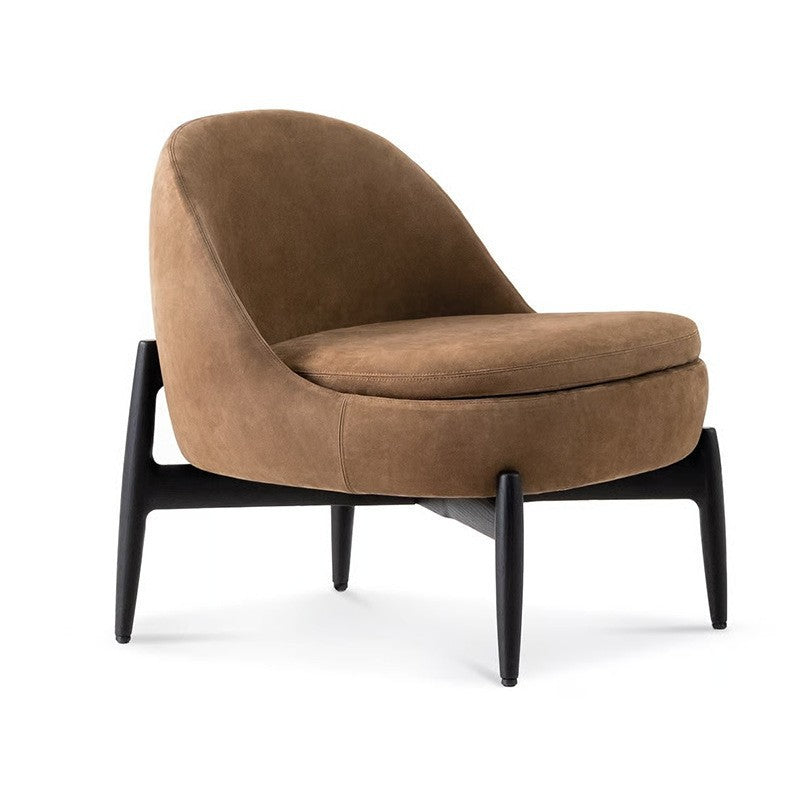
Armchair: Any upholstered chair with two armrests. Back height 28–38 inches. Neutral upright posture. Works in most room styles. Wide size and shape variation across types.
Wingback chair: A specific armchair type. Back height 40–50 inches. Has two lateral wing panels extending forward from the upper back. Formal silhouette. Best in rooms with high ceilings (9 ft+) and traditional or transitional design direction.
Key rule: If the chair has a tall back with two side panels that curve or angle forward past the shoulders, it is a wingback chair. If the back is flat, low, or curved without side panels, it is a standard armchair type.
What Is an Armchair?
An armchair is the broadest category of upholstered single seats with two armrests. The term does not describe a specific silhouette — it describes a structural feature. Within the armchair category sit dozens of distinct chair types: barrel chairs, club chairs, lounge chairs, accent armchairs, and wingback chairs are all armchairs.
Structural characteristics (standard accent armchair):
-
Back height: 28–38 inches from floor
-
Back angle: 90–100 degrees (upright to slight recline)
-
Seat depth: 19–22 inches
-
Seat height: 17–19 inches
-
Armrest height: 24–28 inches from floor
-
Width: 26–32 inches
Frame construction: Standard armchairs use a four-leg or sled-base frame with separate back and seat subframes connected at the rear uprights. The arm connects to both the seat frame and the back upright — a single-point arm attachment at only the seat frame is a common construction shortcut that leads to arm wobble within 12–18 months of regular use.
Foam specification: Seat cushions in standard armchairs perform reliably at 30–35 kg/m³ for residential use (3–5 times per week). Daily residential or commercial use requires 35–40 kg/m³ to maintain shape for 5–8 years.
Best environments:
-
Living room conversation areas
-
Bedroom corners and reading zones
-
Hotel guest rooms and lobby seating
-
Office lounge areas
-
Dining-adjacent seating zones
What Is a Wingback Chair?
A wingback chair is a high-back armchair with two lateral wing panels that extend forward from the upper portion of the backrest — typically beginning 20–24 inches above the seat and angling or curving forward past the user's shoulders. The wings were originally functional: designed to shield seated users from fireplace drafts and reflect heat back toward the body. In contemporary use, the wings serve primarily as a design and silhouette element.
Structural characteristics:
-
Back height: 40–50 inches from floor (defining feature — tallest of all standard accent chair types)
-
Back angle: 90–100 degrees (upright — wingback chairs do not recline)
-
Wing height: begins 20–24 inches above seat, extends 6–10 inches forward from the back plane
-
Seat depth: 20–24 inches
-
Seat height: 17–19 inches
-
Armrest height: 24–28 inches from floor
-
Width: 28–34 inches (wings add perceived visual width beyond the seat)
Frame construction: The tall back requires a reinforced vertical frame structure. A wingback chair back carries more lateral moment (side-force from the wings and tall height) than a standard armchair. Frames built from kiln-dried solid hardwood with moisture content below 12% resist this lateral stress. Frames using a single central vertical post without cross-bracing or corner blocks develop visible back lean or tilt within 18–24 months under regular use.
The wing panels themselves require internal frame support — a wood or steel subframe inside each wing holds the upholstered panel in position. Wings without internal support collapse inward over time, losing the defined silhouette that defines the chair type.
Foam specification: Wingback chair seat cushions require the same density as standard armchairs — 30–35 kg/m³ for residential use, 35–40 kg/m³ for commercial or daily use. Back cushion padding in wingback chairs is typically 18–25 kg/m³ (softer than seat foam) — the back panel supports posture, not primary weight load.
Best environments:
-
Living rooms with ceiling height of 9 feet or above
-
Traditional, transitional, or maximalist interior design directions
-
Home libraries and studies
-
Formal sitting rooms
-
Hotel lobbies with high ceilings and heritage design aesthetic
-
Master bedroom sitting areas as a statement piece
Side-by-Side Comparison
|
Feature |
Standard Armchair |
Wingback Chair |
|
Back height |
28–38 inches |
40–50 inches |
|
Back angle |
90–100 degrees |
90–100 degrees |
|
Wing panels |
None |
Present — extends 6–10 in forward |
|
Seat depth |
19–22 inches |
20–24 inches |
|
Seat height |
17–19 inches |
17–19 inches |
|
Width |
26–32 inches |
28–34 inches |
|
Design weight |
Light to medium |
Heavy — strong visual presence |
|
Best ceiling height |
8 feet or above |
9 feet or above |
|
Design style fit |
Contemporary, transitional, minimalist |
Traditional, transitional, maximalist |
|
Frame complexity |
Standard |
Higher — wing subframe required |
|
Commercial use fit |
High |
Medium — style-dependent |
The Structural Difference That Matters Most: Back Height
The most consequential difference between a standard armchair and a wingback chair is back height — not the wings themselves.
A standard armchair back at 28–38 inches sits below or at eye level when a person is standing. It does not dominate the room visually. In a living room with an 8-foot ceiling, a 34-inch back height occupies 35% of the wall height — proportionally balanced.
A wingback chair back at 40–50 inches occupies 42–52% of an 8-foot wall height. In rooms with standard ceiling heights, this proportion reads as heavy and space-consuming. In rooms with 9–10 foot ceilings, the same chair reads as appropriately scaled and architecturally grounded.
This is the primary reason wingback chairs underperform in small rooms or contemporary spaces — not the wings, but the back height relative to ceiling height and room scale.
Rule: Confirm your ceiling height before specifying a wingback chair. In rooms with ceilings below 8.5 feet, a standard armchair with a 32–36 inch back height will read as better proportioned.
Which One Is Right for Your Space?
Choose a standard armchair if:
-
The room ceiling is 8 feet or standard residential height
-
The design direction is contemporary, minimalist, or Scandinavian
-
The chair will be used in a conversation group with a sofa — standard armchair back height aligns with most sofa back heights (28–36 inches), creating visual consistency
-
The space is small or medium — under 180 sq ft living room
-
Multiple chairs are needed in the same zone — wingback chairs in pairs read as formally staged; standard armchairs pair more naturally
Choose a wingback chair if:
-
The room has a ceiling height of 9 feet or above
-
The design direction is traditional, transitional, English country, or maximalist
-
The chair is positioned as a solo statement piece — reading corner, bedroom focal chair, or fireplace-adjacent seat
-
The room has enough depth — a wingback chair needs at least 36 inches of wall-to-back clearance to read properly, plus circulation space in front
-
The project is a heritage hotel, private members club, or formal hospitality setting where the silhouette communicates brand character
For commercial and B2B buyers:
Standard armchairs work across virtually all commercial contexts — hotel rooms, lobbies, offices, restaurants. The neutral proportions adapt to most interior directions and do not restrict design options for future renovations.
Wingback chairs work in specific commercial contexts: heritage hotels, private clubs, law firm reception areas, and high-end residential hospitality suites. A boutique hotel in London ordering 40 wingback chairs for guest-room reading corners specified kiln-dried hardwood frames with wing subframe reinforcement and 35 kg/m³ seat foam — ordering factory-direct from Penghao Furniture at 22% below the equivalent UK retail specification price.
Common Buying Mistakes
Mistake 1 — Choosing a wingback chair for a low-ceiling room. A 46-inch wingback back height in a room with an 8-foot ceiling reads as oversized and formally mismatched. The chair physically fits the room but visually dominates it. Test: the chair back should not exceed 50% of the wall height from floor to ceiling.
Mistake 2 — Choosing a standard armchair for a statement position. A 32-inch back-height armchair placed at the end of a long hallway or as the focal point of a large living room (200+ sq ft) reads as visually insufficient — too small for the space it is meant to anchor. A wingback chair or high-back accent chair (38–44 inches) performs better in statement positions.
Mistake 3 — Ignoring wing panel construction quality. Wings without an internal subframe collapse inward within 12–24 months. When evaluating a wingback chair, press the wing panel from the outside — it should resist pressure with minimal flex. Panels with more than half an inch of inward flex under hand pressure have insufficient internal support.
Mistake 4 — Assuming wingback chairs are only for traditional spaces. Contemporary wingback chairs with clean lines, low-profile wings, and neutral upholstery (boucle, performance fabric, tight-back linen) work in transitional and even contemporary spaces. The silhouette reads differently in a modern interior — architectural rather than formal.
How Penghao Furniture Manufactures Both Types
Penghao Furniture produces both standard armchairs and wingback chairs through factory-direct manufacturing in China, with export to the US and Europe.
Standard armchair frame: Kiln-dried solid hardwood, four-leg or sled-base construction. Arm attachment connects to both seat frame and back upright — dual-point connection prevents arm wobble under lateral load.
Wingback chair frame: Kiln-dried solid hardwood back uprights with cross-bracing at the mid-back and shoulder height. Wing panels include an internal hardwood or steel wire subframe to maintain panel shape and resist inward collapse over time.
Foam: Seat cushions available in 30 kg/m³ (standard residential), 35 kg/m³ (daily residential or light commercial), and 40 kg/m³ (heavy commercial — hotel rooms, office lounges). Foam specification confirmed at order stage.
Customization: Back height, wing dimensions, seat depth, fabric, upholstery, and leg finish are adjustable per OEM order. Custom wingback specifications — including reduced-wing contemporary profiles — are available for buyers who want the silhouette without the traditional association.
MOQ: 10–50 units depending on configuration. Lead time: 15–45 days from confirmed specification. Cost: 20–40% below equivalent US retail pricing for the same frame and foam specification.
FAQ
What is the difference between an armchair and a wingback chair?
An armchair is any upholstered chair with two armrests — it is a broad category that includes many chair types. A wingback chair is a specific type of armchair defined by two lateral wing panels extending forward from the upper backrest and a back height of 40–50 inches from the floor. All wingback chairs are armchairs, but most armchairs are not wingback chairs.
Why is it called a wingback chair?
The name comes from the two lateral panels — "wings" — that extend forward from the upper portion of the backrest. These wings were originally designed to shield the seated user from cold drafts in rooms heated by open fireplaces, and to reflect heat from the fire back toward the body. The functional purpose has largely disappeared in modern heated interiors, but the structural feature and name remain.
Are wingback chairs comfortable?
Wingback chairs are comfortable for upright seated use — reading, conversation, or alert rest — for sessions of 30–60 minutes. The back angle is 90–100 degrees (upright), which does not support passive resting as effectively as a lounge chair (100–115 degrees). For sessions over 60 minutes, a lounge chair or club chair with a deeper seat and more reclined angle provides better sustained comfort.
What ceiling height do I need for a wingback chair?
A wingback chair with a back height of 40–50 inches works best in rooms with ceiling heights of 9 feet or above. In rooms with standard 8-foot ceilings, the chair back occupies 42–52% of the wall height a proportion that reads as heavy and oversized in most residential spaces. For 8-foot ceilings, a standard armchair with a 32–36 inch back height is better proportioned.
Can wingback chairs work in a modern or contemporary interior?
Yes with the right specification. A wingback chair with a low-profile wing (extending 4–6 inches forward rather than 8–10), a tight back (no cushion, fabric pulled directly over the frame), and neutral upholstery (boucle, linen, performance fabric) reads as architectural rather than traditional. Avoid tufting, fringe, and cabriole legs for a contemporary application.
What is the minimum order quantity for wingback chairs from Penghao Furniture?
Penghao Furniture's minimum order quantity for wingback chairs starts at 10–50 units depending on the specific configuration, fabric, and customization requirements. For hospitality or commercial projects requiring custom back height, wing dimensions, or OEM fabric specification, contact Penghao directly for a quote and lead time confirmation.
Summary
An armchair is a broad category — any upholstered chair with two armrests. A wingback chair is one specific type within that category, defined by its tall back (40–50 inches) and two lateral wing panels extending forward from the upper backrest.
The choice between a standard armchair and a wingback chair depends on three factors: ceiling height, design direction, and the chair's function in the room. Standard armchairs work across most rooms and styles. Wingback chairs work best in rooms with 9-foot ceilings, traditional or transitional design directions, and as solo statement pieces.
Penghao Furniture manufactures both types factory-direct, with OEM customization for back height, wing profile, foam density, and fabric. MOQ starts at 10 units. Lead time is 15–45 days.
Request a Quote for Wingback Chairs
