
Cart
0
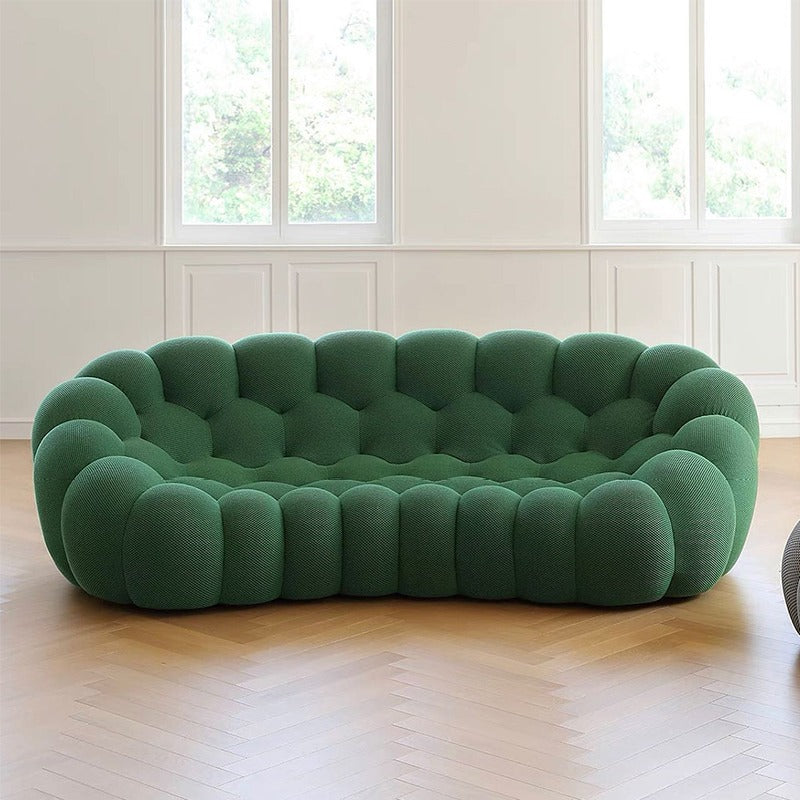
A sinking sofa is usually caused by collapsed foam, stretched webbing, weakened springs, or frame damage. The fastest fix is identifying which layer failed first. In most cases, replacing low-density foam (<28 kg/m³) or reinforcing the suspension system restores support and extends sofa life by 3–7 years.
Why does a sofa start sinking?
A sofa sinks when its support structure loses the ability to distribute body weight evenly. The failure usually starts in one of four areas:
-
Cushion foam collapse
-
Stretched webbing
-
Broken or weakened springs
-
Cracked wooden frame
Core failure points (EAV):
-
Foam → low density → permanent compression
-
Webbing → tension loss → seat drop
-
Spring system → metal fatigue → uneven support
-
Frame → joint failure → structural collapse
How to identify what is causing the sofa to sink
The correct repair depends on locating the actual failure point.
| Problem | Symptoms | Most Likely Cause |
|---|---|---|
| Cushion feels flat | Seat stays compressed | Foam collapse |
| Entire seat dips | Uniform sinking | Webbing stretch |
| One side lower | Uneven support | Broken spring |
| Creaking or instability | Movement in frame | Loose/cracked frame |
Operational moment: A sofa may appear to have “bad cushions,” but removing the cushion often reveals stretched webbing sagging 3–5 cm below frame level, meaning the support base—not the cushion—is failing.
How to fix sinking sofa cushions
Collapsed cushions are the most common issue.
Step 1 — Remove the cushion cover
Inspect foam shape and resilience.
Step 2 — Test foam recovery
Press down firmly:
-
Recovery in 1–2 seconds = healthy foam
-
Slow/no recovery = degraded foam
Step 3 — Replace or reinforce foam
Use:
-
35–45 kg/m³ foam for long-term durability
-
Foam topper + batting for moderate sagging
EAV examples:
-
Replacement foam → density → 35–45 kg/m³
-
Support layer → batting wrap → improved shape retention
Skeptic’s detail: Adding only fiberfill temporarily increases volume but does not restore structural support. The core foam must handle compression resistance.
How to fix stretched sofa webbing
Elastic webbing supports the seat beneath the cushions. Over time, tension weakens.
Signs of stretched webbing
-
Seat base hangs downward
-
Cushions feel unstable even after replacement
Repair process
-
Remove bottom dust cover
-
Inspect webbing tension
-
Replace stretched straps with heavy-duty elastic or jute webbing
-
Staple securely with tension applied
Recommended tension: Webbing should flex slightly—not sag under hand pressure.
How to repair broken sofa springs
Spring failure creates uneven seating and localized sinking.
Common spring systems
-
Sinuous springs
-
Pocket springs
-
Coil springs
Repair options
-
Reattach loose springs
-
Replace broken springs
-
Reinforce with spring clips/support wire
Condition trigger: If the seat sinks more than 5–7 cm below adjacent seats, spring fatigue is likely.
How to fix a sinking sofa frame
Frame failure is the most serious structural issue.
Common frame problems
-
Cracked hardwood rails
-
Loose corner joints
-
Broken support beams
Repair process
-
Remove upholstery access panel
-
Reinforce cracked areas with wood braces
-
Apply wood glue + screws
-
Add corner blocks for load stability
EAV examples:
-
Frame → material → kiln-dried hardwood
-
Joint reinforcement → corner blocks + screws → improved load distribution
Temporary fixes for a sinking sofa
Temporary solutions improve usability but do not solve structural failure.
Quick fixes
-
Plywood board under cushions
-
Cushion support inserts
-
Foam topper layers
Limitations
These methods reduce sinking temporarily but increase pressure on weakened components.
Rule: If the sofa is over 7–10 years old and multiple systems are failing simultaneously, replacement may be more cost-effective.
How to prevent sofa sinking in the future
Preventive maintenance extends lifespan significantly.
Prevention checklist
-
Use foam ≥35 kg/m³
-
Rotate cushions every 2–4 weeks
-
Avoid concentrated seating on one spot
-
Inspect springs/webbing annually
-
Maintain humidity between 30–50%
Operational moment: Rotating cushions monthly reduces compression concentration, extending seat consistency by 20–30% over multi-year use.
Best materials to avoid sofa sinking
High-quality construction dramatically slows structural fatigue.
| Component | Recommended Standard |
|---|---|
| Foam | 35–45 kg/m³ HR foam |
| Frame | Kiln-dried hardwood |
| Suspension | 8-gauge sinuous springs |
| Upholstery | Tight woven performance fabric |
Penghao Furniture manufactures sofas using high-density foam systems, reinforced hardwood frames, and commercial-grade suspension structures designed for long-term residential and hospitality durability.
When should you replace instead of repair?
Repair is not always economically efficient.
Replace the sofa if:
-
Frame is cracked in multiple areas
-
Springs and foam both failed
-
Repair cost exceeds 40–50% of replacement cost
-
Sofa is structurally unstable
Repair if:
-
Only cushions failed
-
Webbing tension weakened
-
One spring system needs replacement
FAQ : How to fix sofa sinking
Why is my sofa sinking in the middle?
Middle-seat sinking usually comes from foam collapse or stretched webbing caused by concentrated usage.
Can plywood fix a sinking sofa?
Yes temporarily, but plywood only masks support failure and does not repair the underlying issue.
What foam is best for fixing sagging cushions?
Use 35–45 kg/m³ high-resilience foam for long-term support.
How much does it cost to fix a sinking sofa?
Minor cushion repairs cost less than frame or spring replacement. Full structural repair can approach replacement cost.
How long should sofa cushions last before sinking?
High-quality cushions last 5–10 years under normal daily use.
Bottom line
A sinking sofa is usually the result of foam degradation, weakened suspension, or frame instability. The most effective long-term fix combines high-density replacement foam, reinforced support systems, and structural frame repair, restoring comfort and extending sofa lifespan for several additional years.
