
Cart
0
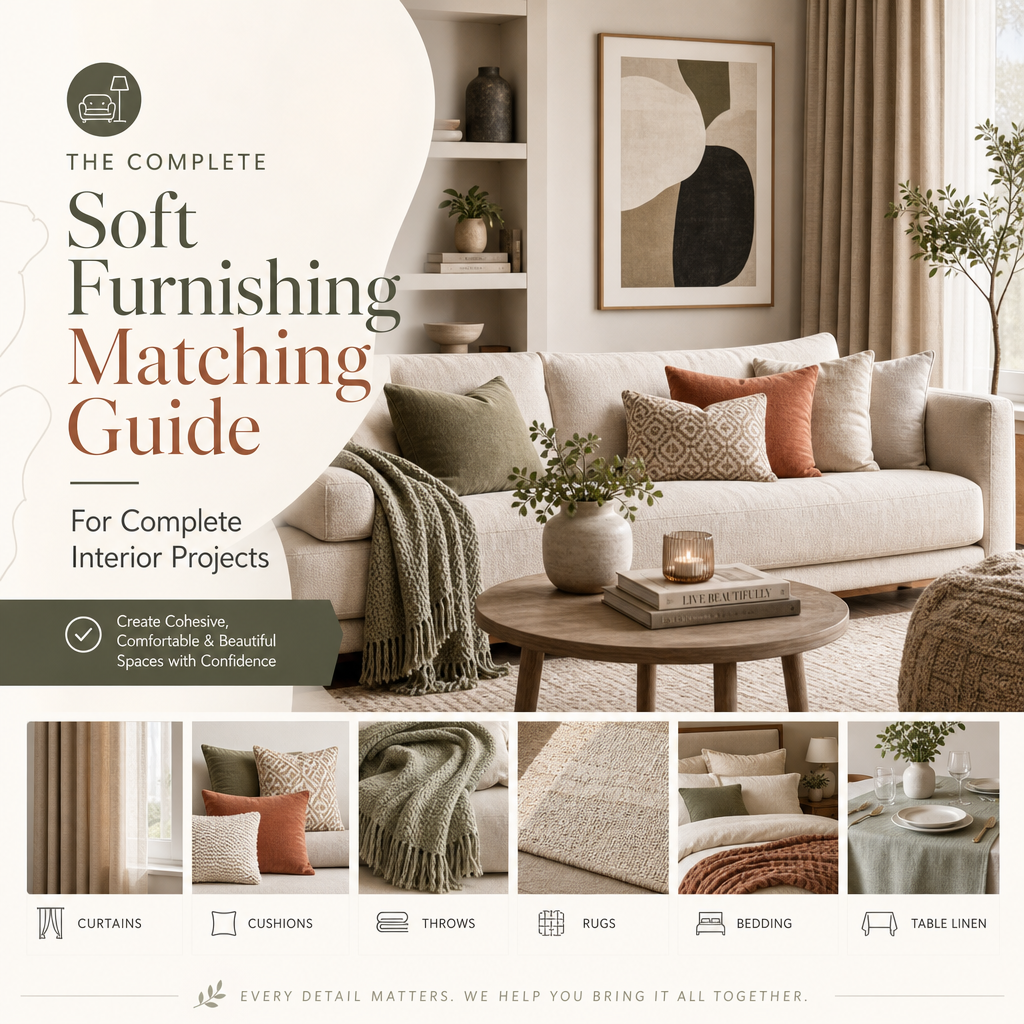
Soft furnishing matching is the difference between buying attractive pieces and creating a room that feels resolved. A sofa, dining chair, bed, cabinet, rug, curtain, and finish palette may all look good individually, but they can still fail together if proportion, color, material, and daily use are not coordinated.
For residential projects, soft furnishing matching helps create visual comfort and practical flow. For hotels, apartments, salons, offices, and commercial spaces, it also protects schedule, purchasing clarity, and project consistency.
This guide explains how to plan a complete furnishing scheme before ordering products, how to connect soft furnishings with factory production, and how Penghao's interior curation service can support project buyers.
What is soft furnishing matching?
Soft furnishing matching is the process of coordinating furniture, upholstery, textiles, colors, materials, finishes, lighting mood, proportions, and room use into one interior scheme. The goal is not to match everything exactly, but to make every selection belong to the same design and function plan.
Penghao's Soft Furnishing Matching Services page frames the service around space, proportion, material, color, daily use, project brief, scheme, specification, and production-ready coordination. That positioning works well for buyers who want a complete interior rather than isolated product sourcing.
Why product-by-product buying creates mismatch
Many projects start with separate decisions. The sofa is chosen first, then dining chairs, then beds, then cabinets, then curtains, then accessories. Each decision may be reasonable alone, but the final room can feel uneven.
Common mismatch problems include:
- A sofa is too deep for the room circulation.
- Dining chairs use a wood tone that conflicts with cabinets.
- Bedside tables sit at the wrong height beside the bed.
- Upholstery colors look different under project lighting.
- Metal finishes vary between chair legs, handles, and lighting.
- A high-style item does not match the cleaning or durability needs of the space.
Soft furnishing matching prevents these problems by starting with the whole room and then moving into products.
Start with the brief
A useful brief should describe the space, user, atmosphere, budget direction, and performance expectations. Do not begin with "send catalog." Begin with what the space must do.
For a villa, the brief may focus on comfort, material richness, storage, and family routines. For a hotel, it may focus on guest experience, cleaning, durability, replacement, and brand consistency. For a salon or spa, it may focus on client comfort, flow, moisture risk, lighting, and reception impact. For apartments, it may focus on compact layouts, repeatability, and long-term use.
Penghao's homepage emphasizes project planning, 3D design cases, custom furniture, custom cabinets, and commercial project examples. That makes the brand's best content angle broader than single-product buying. The buyer is not only selecting furniture; they are building a coordinated interior package.
Build the palette before the purchase list
A furnishing palette should define:
- Main wood or cabinet finish
- Secondary accent finish
- Upholstery colors and textures
- Metal finish
- Stone or tabletop direction
- Soft textile family
- Warm or cool lighting mood
- Contrast level
This palette does not need to be complicated. It needs to be clear enough that every product can be judged against it. A cream boucle sofa, walnut dining chair, black metal desk, glossy cabinet, and rose-gold accent can work together only if the palette controls balance and repetition.
For international B2B projects, the palette should also consider material availability and production repeatability. A finish that can be made once but not repeated reliably is risky for hotels, apartments, or retail programs.
Match products by zone
Soft furnishing matching is easier when the project is organized by zone.
| Zone | Key items | Matching focus |
|---|---|---|
| Living room | Sofa, lounge chair, coffee table, TV stand, rug, curtains | Comfort, depth, color, movement |
| Dining room | Dining table, dining chairs, lighting, side storage | Table-chair fit, finish harmony, cleaning |
| Bedroom | Bed, nightstands, dresser, mirror, vanity, textiles | Height alignment, calm palette, storage |
| Home office | Desk, office chair, storage, lighting | Ergonomics, work surface, material contrast |
| Hotel lobby | Lounge chairs, sofas, tables, soft textiles | Durability, circulation, visual welcome |
| Salon or spa | Reception, lounge, treatment furniture, storage | Cleanability, comfort, brand atmosphere |
Relevant Penghao starting points include Living Room, Dining Room, Bedroom, Home Office, and Custom Cabinet Solutions.
Use layout rules to protect circulation
Furniture matching is not only visual. It also controls movement. A beautiful room that blocks circulation will feel uncomfortable.
For commercial projects in the United States, the U.S. Access Board's ADA accessibility standards are useful context for thinking about public accommodation spaces, accessible routes, and built environments. Even when a project has its own local code consultant, buyers should keep circulation and usability in the furnishing plan from the beginning.
Ask these layout questions:
- Can people move around the seating without awkward turns?
- Do dining chairs pull out without blocking service paths?
- Does the sofa depth leave enough walking space?
- Can drawers and cabinet doors open fully?
- Are rugs, tables, and seating grouped naturally?
- Does the room still work when people are using it, not just when photographed?
The best furnishing scheme is attractive at first glance and practical every day.
Connect soft furnishing design to manufacturing
Soft furnishing matching becomes stronger when it stays connected to production. If the design team selects materials without knowing manufacturing limits, the project can become expensive or inconsistent. If the factory produces items without understanding the whole scheme, the result can feel disconnected.
Penghao's advantage is that its service pages connect scheme development with custom furniture, cabinetry, material planning, and manufacturing support. That means the buyer can discuss proportion, material behavior, construction, packaging, and project coordination together.
For a complete interior project, ask the supplier to help prepare:
- Room-by-room product list
- Finish and material board
- Upholstery swatch set
- Product dimension schedule
- 3D or visual reference
- Sample approval plan
- Packaging and room label plan
- Production timeline by product family
This creates one shared language between design and production.
Soft furnishing matching RFQ checklist
| RFQ item | What to send |
|---|---|
| Project type | Villa, apartment, hotel, salon, office, showroom |
| Room list | Living, dining, bedroom, office, lobby, reception, storage |
| Floor plans | Dimensions, doors, windows, circulation, fixed elements |
| Style direction | Reference images, color mood, material preferences |
| Product scope | Sofas, chairs, beds, dining, cabinets, tables, textiles |
| Quantity | Quantity by room, unit, or project phase |
| Budget direction | Target level or price sensitivity |
| Timeline | Design approval, sample, production, delivery dates |
| Destination | Country, warehouse, site, or staged delivery |
The better the brief, the more useful the proposal. Penghao states that its project team normally responds to inquiries within 1-2 business days, so buyers should send a structured brief rather than a vague catalog request.
FAQ
What is included in soft furnishing matching?
Soft furnishing matching can include furniture selection, upholstery, fabrics, color palette, finish coordination, room layout, rugs, curtains, material boards, lighting mood, and production-ready product specifications. The exact scope depends on the project.
Is soft furnishing matching only for luxury homes?
No. It is useful for homes, apartments, hotels, salons, offices, showrooms, and commercial spaces. Any project with multiple rooms or repeated units benefits from coordinated materials, dimensions, colors, and purchasing logic.
How does soft furnishing matching help B2B buyers?
It reduces mismatched finishes, wrong dimensions, unclear product scope, and disconnected purchasing. It also helps buyers communicate one room-by-room plan to the manufacturer before sampling and bulk production.
Should furniture matching happen before or after product selection?
It should happen before final product selection. Start with the space, palette, use case, and room relationships, then choose products that support that plan.
Can Penghao help coordinate complete interior furnishings?
Penghao offers soft furnishing matching, custom furniture manufacturing, custom cabinet solutions, and product collections for living rooms, dining rooms, bedrooms, and home offices. Buyers should send floor plans, style references, room list, quantity, timeline, and destination market.
Final thought
Soft furnishing matching is not decoration after furniture buying. It is a planning method that connects space, color, material, comfort, production, delivery, and daily use. For complete homes, hotels, apartments, salons, offices, and showrooms, start with the room brief and palette, then let Penghao help translate that direction into products, materials, and a production-ready furnishing plan.
Sources used in this guide
- Penghao Furniture, Soft Furnishing Matching Services
- Penghao Furniture, Living Room collection
- Penghao Furniture, Dining Room collection
- Penghao Furniture, Bedroom collection
- Penghao Furniture, Custom Cabinet Solutions
- U.S. Access Board, ADA Accessibility Standards
