
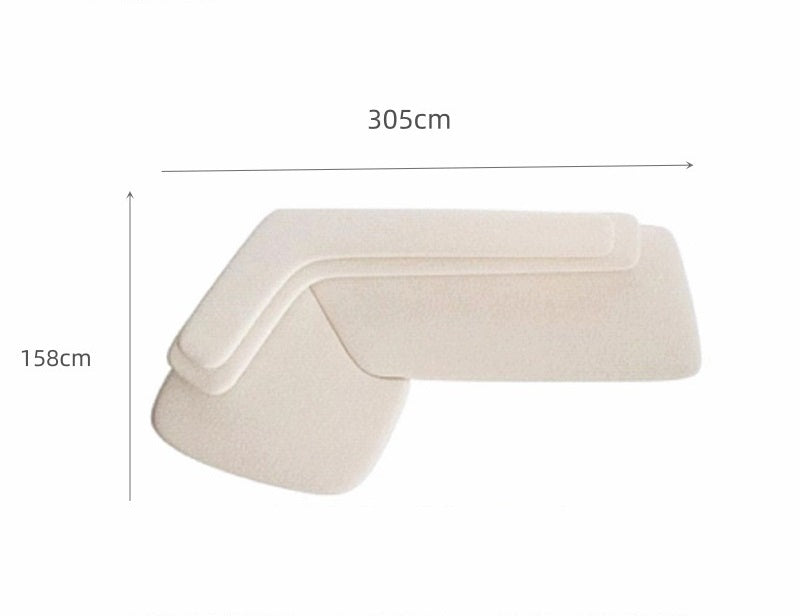
What is the best sectional sofa for a large space?
The best sectional sofa for a large space is a modular or U-shaped sectional between 110–160 inches wide that anchors the room, supports 5–8 seats, and maintains 36–48 inches of circulation space around it. Large rooms require proportion, not just size—oversized sectionals must define zones without blocking movement.
Why standard sofas fail in large living rooms
Large living rooms expose proportion problems immediately. A 72–90 inch standard sofa leaves empty zones, breaks conversation flow, and forces additional furniture that creates visual clutter instead of structure.
An interior designer working on a 450 sq ft open-plan living room placed a standard 3-seater sofa against the wall. Result: the center remained unused, seating felt disconnected, and traffic paths crossed through the seating area. The fix was a 128-inch U-shaped sectional, which created a defined social zone and improved seating capacity from 3 to 7 people without adding extra chairs.
Large spaces don’t need more furniture. They need correct furniture scale.
What size sectional sofa works for large spaces?
A sectional sofa for a large space must scale with the room while preserving movement flow. The correct size depends on room width, seating capacity, and layout.
Recommended sectional sizes
| Room Size | Sectional Width | Layout Type | Seating Capacity |
|---|---|---|---|
| 250–300 sq ft | 100–110 inches | L-shape | 4–5 people |
| 300–400 sq ft | 110–130 inches | L-shape / Chaise | 5–6 people |
| 400–600 sq ft | 130–150 inches | U-shape | 6–8 people |
| 600+ sq ft | 150–180 inches | Modular / Double chaise | 8–10 people |
Key rule: Maintain 36–48 inches clearance between the sectional and walls or walkways to avoid blocking circulation.
Which sectional layout is best for large rooms?
The best sectional layout for a large room is determined by how the space is used—entertaining, family use, or zoning open layouts.
1. U-Shaped Sectional (Best for social spaces)


A U-shaped sectional creates a central conversation area and supports 6–8 people simultaneously. It works best in open-plan living rooms where the sofa defines the seating zone without walls.
2. L-Shaped Sectional (Best for flexible layouts)

An L-shaped sectional anchors one side of the room while leaving open space for movement or additional furniture. It fits 300–500 sq ft rooms and balances structure with flexibility.
3. Modular Sectional (Best for customization)

A modular sectional allows reconfiguration into U-shape, L-shape, or separate seating units. Large spaces benefit from modular systems because layouts can change based on use entertaining, lounging, or zoning.
What materials are best for large sectional sofas?
Large sectional sofas experience higher usage because they serve multiple people simultaneously. Material selection directly impacts durability, maintenance, and long-term cost.
Fabric sectionals (Best for family use)
-
Performance fabric resists stains and wear
-
Ideal for households with kids or pets
-
Average lifespan: 6–10 years with daily use
Leather sectionals (Best for luxury interiors)
-
Full-grain leather lasts 10–15 years
-
Easy to clean and resistant to spills
-
Higher upfront cost but lower long-term maintenance
Velvet sectionals (Best for design-focused spaces)
-
Adds texture and visual depth
-
Requires controlled use (low-traffic zones)
-
Needs regular maintenance to prevent wear marks
How to position a sectional sofa in a large room
A sectional sofa must define the space without blocking movement or creating dead zones.
Layout rules that work:
-
Place the sectional away from walls in large rooms to create a central seating zone
-
Align the longest side with the primary visual anchor (TV, fireplace, or view)
-
Use rugs (8x10 ft or larger) to define the seating area
-
Keep walkways clear (minimum 36 inches) around the sectional
A common mistake: pushing a large sectional against the wall. This reduces visual balance and wastes central space.
What makes a sectional sofa high-quality?
Large sectionals are a long-term investment. Quality determines whether the sofa lasts 5 years or 15 years.
Key quality indicators:
-
Frame: Solid hardwood (kiln-dried) lasts 10+ years
-
Foam density: 1.8–2.5 lbs/cu ft for long-term support
-
Joinery: Corner blocks and reinforced joints prevent sagging
-
Upholstery: Double-stitched seams for durability
A sectional used daily by a family of 5 typically shows sagging within 3–4 years if built with low-density foam. High-density foam maintains structure for 8+ years.
Why modular sectionals outperform traditional sectionals
Modular sectionals solve a structural limitation of fixed sofas: inflexibility.
Traditional sectionals lock you into one layout. Modular systems allow:
-
Reconfiguration for different room uses
-
Easier transportation and installation
-
Expansion over time
A homeowner moving from a 300 sq ft apartment to a 600 sq ft house can expand a modular sectional instead of replacing it entirely. This reduces long-term cost and increases usability.
Where to buy the best sectional sofa for large spaces
Choosing the right supplier determines quality, customization, and pricing—especially for large sectionals.
Retail stores
-
Limited customization
-
Higher cost per unit
-
Faster delivery
Marketplaces (Alibaba)
-
Wide supplier range
-
Quality varies significantly
-
Requires verification and negotiation
Direct manufacturers (Best option for value + quality)
Working with a direct manufacturer provides:
-
Custom sizing for large spaces
-
Material selection flexibility
-
Lower cost per unit (20–40% savings vs retail)
-
Consistent production quality
Penghao Furniture specializes in modular and large-scale sectional sofas designed for both residential and commercial spaces. The manufacturing approach focuses on:
-
Custom dimensions for oversized living rooms
-
High-density foam and hardwood frames
-
Bulk production for B2B buyers (hotels, offices, developers)
-
Design alignment with modern and minimalist interiors
Final verdict
The best sectional sofa for a large space is not just the biggest one—it is the one that fits proportion, supports circulation, and defines the room functionally.
-
Use U-shaped sectionals for social layouts
-
Use L-shaped sectionals for balanced flexibility
-
Choose modular sectionals for long-term adaptability
-
Prioritize frame quality and foam density over aesthetics alone
Large spaces demand intentional design. The right sectional turns empty space into a structured, functional environment.
FAQ
What size sectional sofa is best for a large room?
A sectional between 110–150 inches wide fits most large living rooms, while spaces over 600 sq ft can accommodate 150–180 inch modular sectionals with 8–10 seating capacity.
Is a U-shaped sectional better than an L-shaped for large spaces?
A U-shaped sectional supports more seating (6–8 people) and defines conversation areas better, while an L-shaped sectional offers more flexibility and open space.
How far should a sectional sofa be from the wall?
A sectional sofa should be placed at least 36 inches away from walls or walkways to maintain proper circulation and usability.
Are modular sectionals worth it for large spaces?
Modular sectionals provide flexibility, scalability, and easier transport, making them more practical for large and evolving living spaces.
What is the best material for a sectional sofa?
Performance fabric works best for families, leather suits luxury interiors with long lifespan, and velvet is ideal for low-traffic design-focused spaces.