
Cart
0
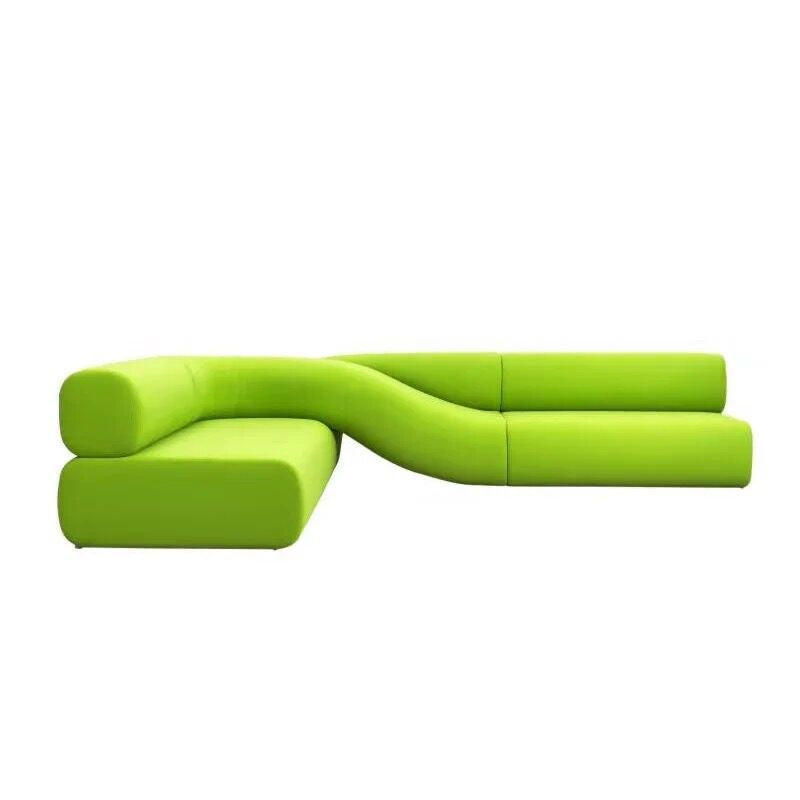
Most sofa-buying mistakes happen before the sofa even enters the room. The issue is rarely the design or color. The real problem is incorrect spatial measurement.
A sofa that is too large restricts movement, blocks circulation paths, and overwhelms the room visually. A sofa that is too small fails to anchor the space and creates imbalance. In both cases, the furniture becomes inefficient because the room and the sofa were never measured as a connected system.
Measuring sofa space correctly is not just about checking wall length. It requires evaluating:
-
Room dimensions
-
Traffic flow
-
Clearance zones
-
Door and hallway access
-
Functional layout requirements
A sofa should fit both physically and operationally within the room.
Why Sofa Measurement Matters
A sofa is one of the largest objects in a living space. Once placed, it defines movement patterns, seating zones, and visual balance.
Improper sizing creates several problems:
-
Blocked walkways
-
Reduced usable space
-
Visual overcrowding
-
Limited furniture flexibility
The goal is not to fit the largest sofa possible. The goal is to maintain comfort, proportion, and movement efficiency simultaneously.
Step 1: Measure the Entire Room First
Before measuring the sofa area, measure the room itself.
Use a tape measure to record:
-
Room length
-
Room width
-
Ceiling height (optional for visual proportion)
Measurements should be taken in centimeters or inches consistently.
Why Full Room Measurement Matters
Many people only measure the wall where the sofa will sit. This creates inaccurate decisions because surrounding circulation space is ignored.
The room must support:
-
Seating
-
Walking paths
-
Tables and accessories
-
Visual openness
The sofa is only one component of the overall layout.
Step 2: Identify the Sofa Placement Area
After measuring the room, determine where the sofa will be positioned.
Common placement types include:
-
Against a wall
-
Floating in the center of the room
-
Corner placement
-
Open-concept zoning
Each placement type changes how much clearance is required.
Step 3: Maintain Proper Clearance Space
Clearance space is the area around the sofa needed for movement and usability.
Recommended Clearance Rules
-
Maintain 70–90 cm between sofa and coffee table
-
Maintain 80–100 cm for walking pathways
-
Leave space near doors and entry points
Without proper clearance, the room feels cramped even if the sofa technically fits.
Step 4: Measure Sofa Width, Depth & Height
A sofa occupies three dimensions, not just width.
Width
Width determines how much horizontal space the sofa consumes.
Typical ranges:
-
Loveseat: 140–180 cm
-
3-seater: 180–240 cm
-
Sectional: 260–400+ cm
Depth
Depth affects how far the sofa extends into the room.
Typical ranges:
-
Standard depth: 85–95 cm
-
Deep seating: 100+ cm
Deep sofas may feel luxurious but can reduce usable space in smaller rooms.
Height
Height affects visual proportion.
Low-profile sofas:
-
Make ceilings feel higher
-
Work well in modern interiors
Tall sofas:
-
Provide stronger back support
-
Create heavier visual presence
Step 5: Check Entry Access Before Buying
One of the most overlooked steps is measuring the delivery path.
A sofa may fit the room but fail to fit through:
-
Doors
-
Hallways
-
Elevators
-
Staircases
Measure:
-
Door width and height
-
Hallway turns
-
Stair dimensions
Compare these measurements with the packaged sofa dimensions.
This step prevents delivery failure and return costs.
Measuring for Different Sofa Types
Different sofa styles require different planning.
Straight Sofa
Simpler to place and measure.
Key requirement:
-
Wall width + clearance space
Sectional Sofa
Requires more detailed measurement because of:
-
Extended chaise or corner section
-
Orientation (left-facing vs right-facing)
Measure:
-
Total wall space
-
Corner clearance
-
Walking paths around extended sections
Modular Sofa
Offers flexibility because sections can be rearranged.
However, total footprint must still be measured accurately to avoid overcrowding.
Small Room vs Large Room Measurement Strategy
Small Rooms
Focus on:
-
Maintaining openness
-
Slim-arm or compact sofas
-
Avoiding excessive depth
A smaller sofa with correct spacing often feels larger functionally than an oversized sofa in a tight room.
Large Rooms
Focus on:
-
Visual balance
-
Anchoring the space
-
Preventing underfurnished appearance
Large spaces often require:
-
Sectionals
-
Modular systems
-
Multiple seating zones
Digital Planning and Floor Mapping
Modern layout planning often uses:
-
Painter’s tape on the floor
-
Paper templates
-
Digital room planners
Marking the sofa footprint physically helps visualize:
-
Walking paths
-
Scale
-
Furniture relationships
This reduces sizing mistakes significantly.
Common Measurement Mistakes
Measuring Only the Wall
This ignores traffic flow and surrounding furniture.
Ignoring Sofa Depth
Depth often creates more space problems than width.
No Delivery Access Check
A frequent cause of failed installations.
Choosing Size Based on Appearance Alone
A visually attractive sofa may not function correctly within the room.
Manufacturer-Level Space Customization
Standard retail dimensions do not always fit unique spaces. In many cases, custom sizing is necessary to optimize layout efficiency.
Penghao Furniture provides:
-
Custom sofa dimensions
-
Modular configurations
-
Space-adaptive sectional layouts
This allows designers and homeowners to align sofa proportions with exact room measurements rather than forcing the room to adapt to fixed retail sizes.
Final Measurement Formula
Before selecting a sofa, confirm:
-
Room dimensions
-
Clearance space
-
Sofa footprint
-
Traffic flow
-
Entry access
A sofa should not simply “fit” inside the room. It should allow the room to function properly after installation.
Conclusion
Measuring sofa space correctly is a layout and usability process, not a simple width calculation.
The right measurements ensure:
-
Comfortable movement
-
Balanced proportions
-
Functional seating arrangement
-
Long-term usability
A correctly sized sofa improves how the entire room operates, while an incorrectly sized sofa compromises both comfort and space efficiency.